9th days on the road.
We left calm Asilah after three nights and headed inland to old Meknes. We didn’t really know what to expect – just had a rough idea of the road and how long it might take. At first, the drive felt easy: good roads, green hills, olive trees, big sky. Beautiful, with strong developing-world vibes.
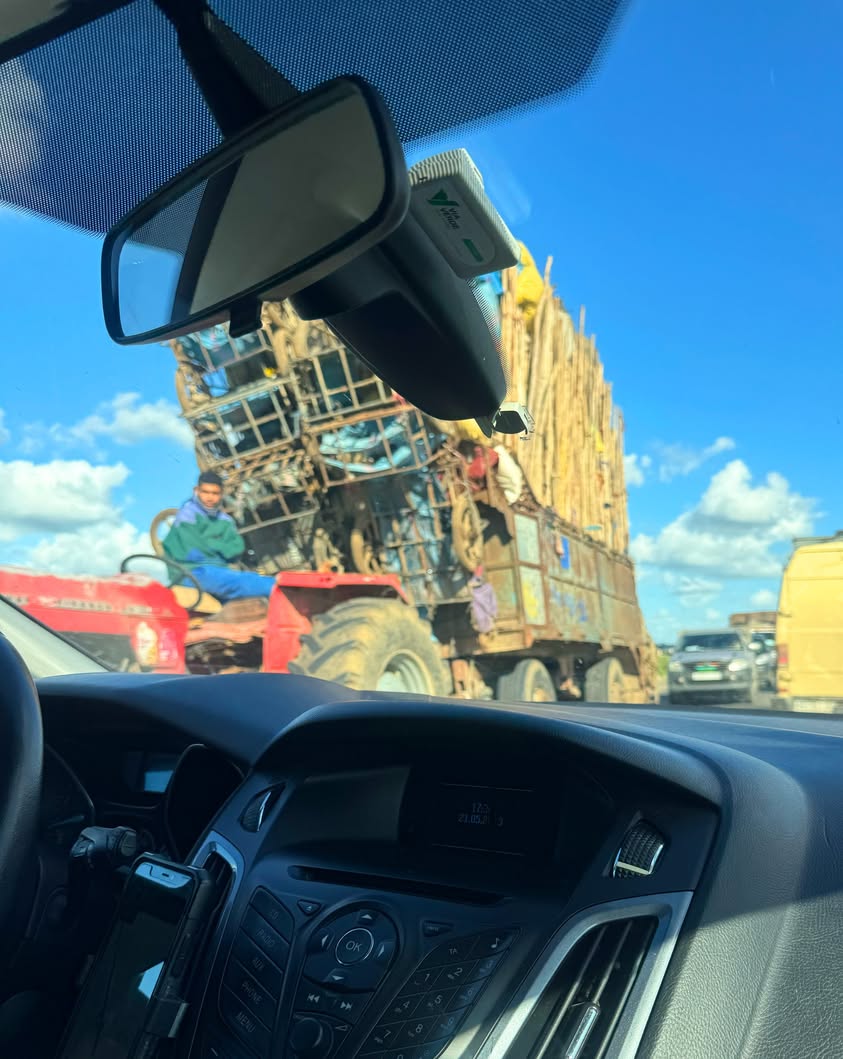
Then the highway turned into a two-lane road, and things got slower. Old vans and trucks crawled uphill. Every so often we passed shepherds walking with dusty sheep. People on donkeys. People walking along the side of the road – everywhere, even in the middle of nowhere. Women were working in the fields. Kids sat near the roadside. There was some trash – plastic bags, old bottles, scattered nylon – and frequent police roadblocks.
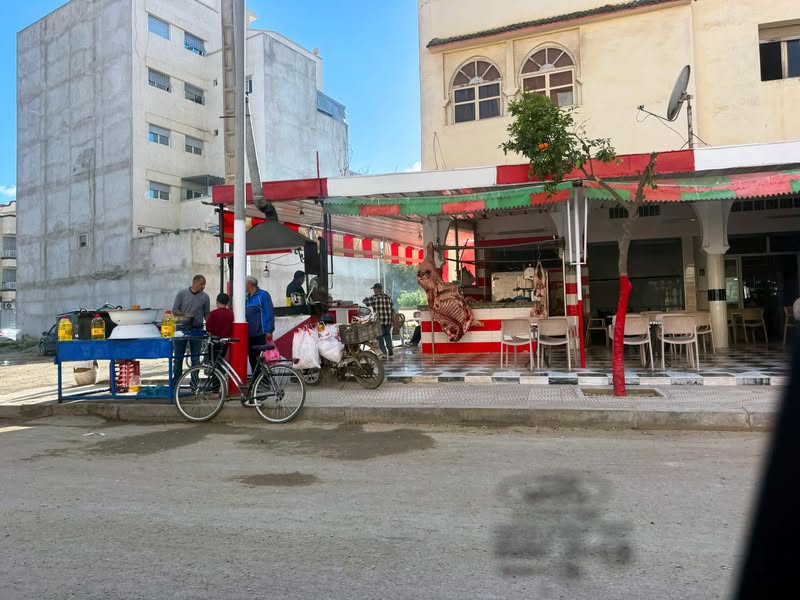
Every now and then, we’d pass through a small town – simple and weathered, full of character and everyday life. Cracked concrete, buildings dark with age. In nearly every town, a butcher shop with a whole cow hanging outside. Big cafés filled with men sitting silently, smoking, watching TV. Always men. Not a single woman in sight. Most wore old, heavy suits in shades of grey and brown.
Our car isn’t powerful, and the road was tight and winding. No shoulder, just one lane each way. We kept getting stuck behind slow, beat-up cars going 40 or 50 km/h. Overtaking felt risky. Our car didn’t have the power, and the curves made it worse. So we waited, inching forward.
Drivers here overtake in a very different way. They pull into your lane mid-overtake, coming straight at you – and expect you to slow down and let them back in. The first time it happened, I freaked out. Then it happened again. And again. Eventually, you realize – this is just how it works here. Overtaking is a shared responsibility. If someone’s in your lane, you’re expected to help them complete the move. It’s crazy, but somehow it works. Speeds are low, so it’s tense but doable. Still, your body stays tight the whole ride.
A few times, wild dogs wandered into the road. One came straight at us. We slammed the brakes – shit – but thank God, nothing happened.
As we got closer to Meknes, the countryside faded. More buildings. More traffic. More noise. Wide roads with broken sidewalks. Old, oversized signs. Crowds. Meknes felt like a big Arabic city frozen in the 1970s – messy, loud, worn, but full of life.
We arrived after dark, tired. Our hotel felt like something from an old Arab movie – worn down, a little dusty, about seven minutes from the medina. Just a place to crash.
After checking in, we headed toward the medina. Parked a few minutes away and had to roll the wheelchair along the road with speeding old cars – the sidewalks weren’t accessible in many parts.
In the medina, it was dark. Shops were shut. Lights were low. The place felt quiet and slightly eerie.
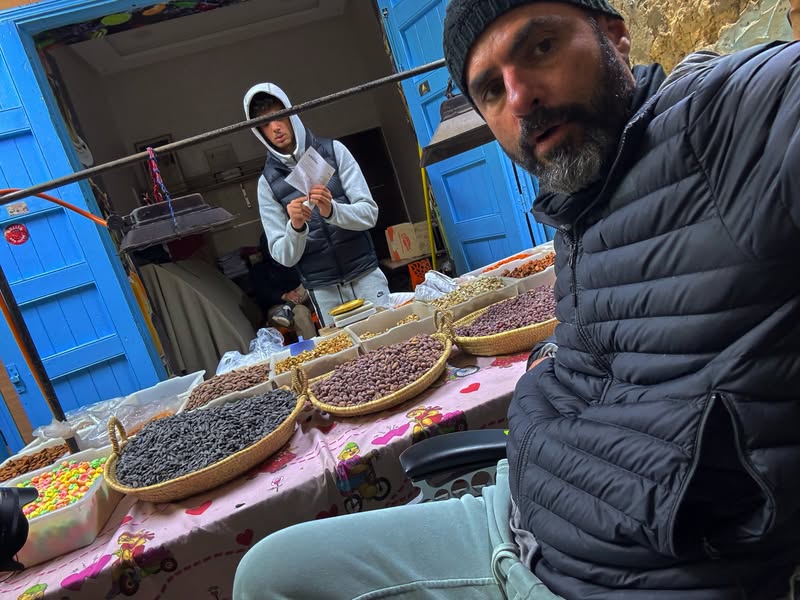
The call to prayer echoed through the streets – Allahu Akbar – bouncing between the alleys. The medina looked endless. Narrow, dark alleys. Tiny, traditional shops still open. Chipped walls, old wooden doors, quiet corners. We walked slowly, not really knowing where we were going. It felt like a movie – surreal. A bit scary, but also beautiful in its own way.
We didn’t stay long. Just enough to get a first taste. We found a small restaurant in one of the alleys. It was quiet. We were the only foreigners there, but no one stared.
It’s morning now, and we plan to go back again soon.